
MEDIA RELEASE/Visa Cash App Racing Bulls Formula One™ Team and Red Bull - Photo: supplied…

JAPAN F1 GP OUR TAKE ON THE MARIO KART LIKE RACING
Our editor John Morris has sat down, crunched some numbers and had a play with his kids Mario Karts whilst reviewing the last round of the F1 GP in Japan last weekend, grab a coldie (if not under age LOL) read what he has to say here:
The Formula 1 World Championship moved to Japan for the third round of their 2026 calendar.
Amidst mixed reactions to the all-new F1 cars thus far, it presented the last opportunity for teams and drivers to gather data and come to grips with the new realities of Boost or overtake modes, harvesting and Superclipping before a one month hiatus brought about by the cancellation of the Bahrain and Saudi Arabian Grands Prix.
It is not unreasonable to say that these changes have brought an even higher level of attention to the championship with drama aplenty and an air of uncertainty in areas one might have not considered for some time.
Take McLaren for example. Oscar Piastri’s incident on the way to the grid in Australia followed by the battery issues which sidelines both Piastri and reigning champion Lando Norris in China might not have been unparalleled in F1 history, though they were rare.
To see Oscar Piastri leapfrog both Mercedes AMG Petronas F1 W17 E Performance cars during the relatively short run into Turn 1 as the race began, was both a welcome sight to fans as it was perplexing given the success of the MCL40 over the preceding two Grand Prix.
It was almost as if the car had hit a Mario Mushroom or Dash Pad to sweep around both Russell and Antonelli at the start.
Such analogies have already gained momentum from comments amongst the F1 grid, with Max Verstappen amongst the most vocal in expressing such concerns.
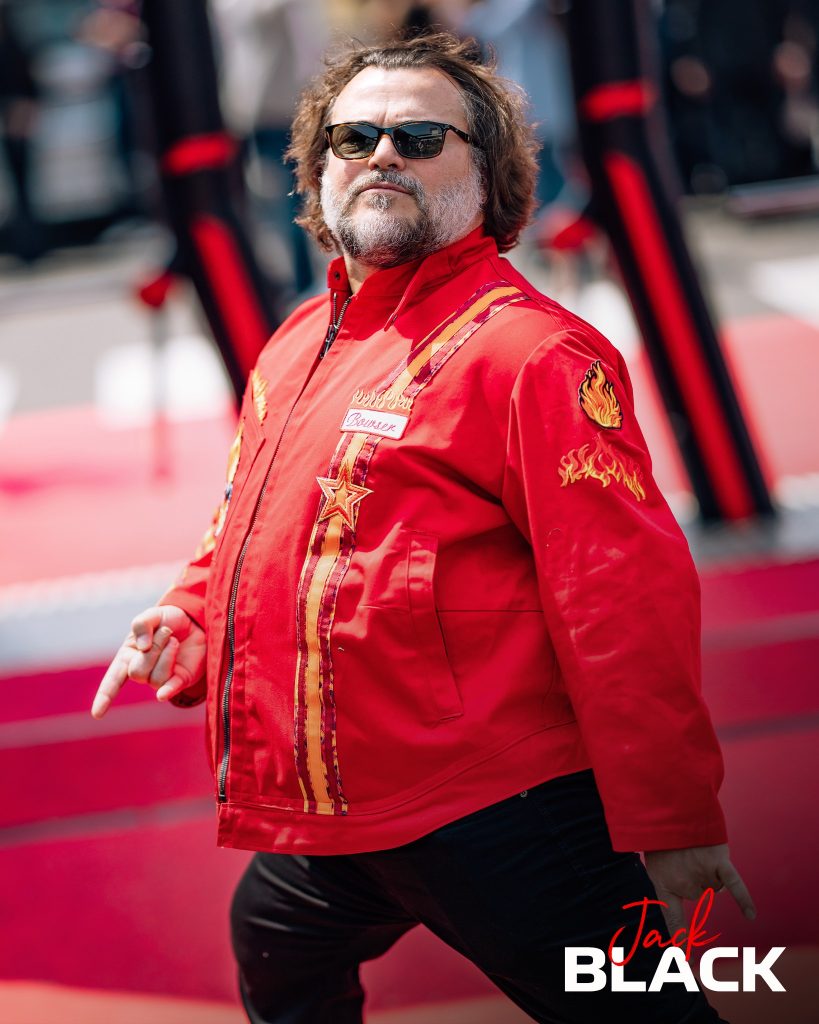
Piastri’s advantage and such theories gained some impetus with the appearance of Jack Black, Chris Pratt and Anya Taylor-Joy (the voices of Bowser, Mario and Princess Peach respectively) on the grid just prior to the running of the Japanese Grand Prix.
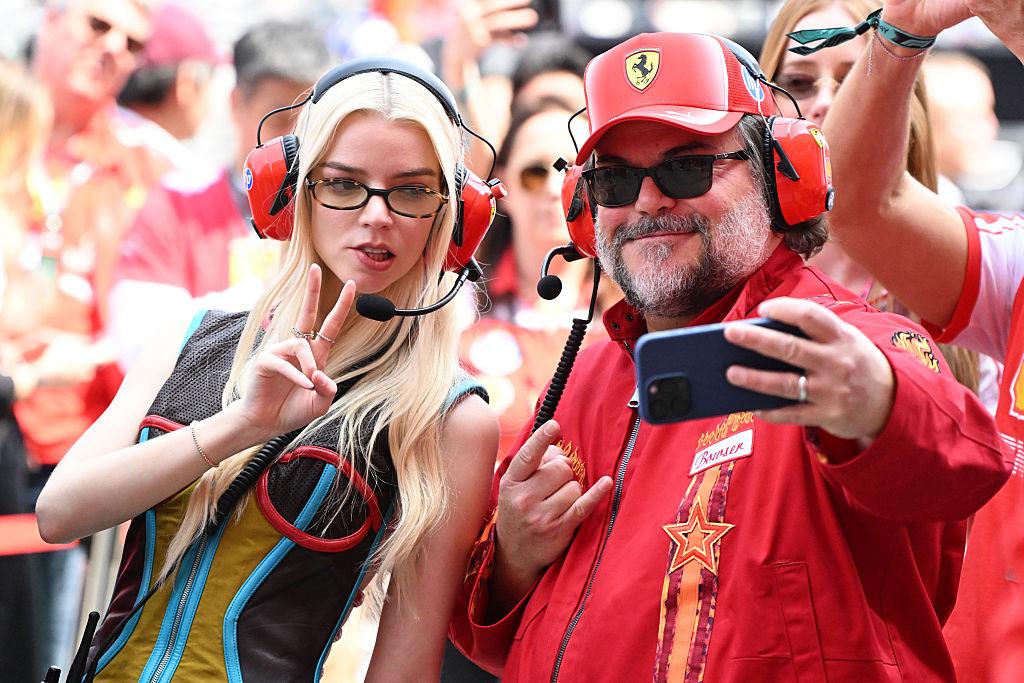
Perhaps their presence did lead to the placement of an errant mushroom which played out to Piastri’s advantage?
Whilst the mushroom and dash pad adds substantial, though temporary gains in Marion Kart, the lightning bolt both shrinks opponents and engine performance, dramatically slowing their progress for a moment or two.
Now think of the Oliver Bearman and Franco Colapinto incident near the half-way point of the Grand Prix. Whilst not wanting to trivialise the severity of the incident take a moment to ponder…
Different energy levels between the pair gave Bearman a 20kmh speed advantage on approach to the Alpine and the Spoon Curve.
That more than doubled when the Haas driver then triggered boost mode. It was an eye opening moment at the approach to the high speed corner.
Colapinto’s mid-track position, combined with his reduced speed, caught out the British driver. He took to the grass to avoid a collision, slid sideways across the track and into the barriers in what was a 50g impact.
Issues pertaining to battery deployment have figured prominently in discussions since the season opener in Australia.
Is it really all a bit ‘Mario Kart’ as described by some? More to the point, was there some level of intent in doing so?
Well perhaps there may be an element of truth, a view not put to bed by the appearance of Black, Pratt and Taylor Joy at the head of the grid.
Given the immense world-wide popularity of the Marios Brothers franchise, such comparisons make F1 easier to understand and even more compelling for the techno-reliant younger generation, elevating Formula 1 into a ‘super galaxy’ of future fans.
Let’s cast our minds back to the 1980s when early versions of motorsport sim racing first hit the computer screens. Labelled as mere games by racing traditionalists, it took almost two decades for computer based simulations to move from mere entertainment to a viable motorsport category in its own right, a valuable driver training tool and a cost-effective data acquisition source for car set up, design and development.
Sim driving rigs and equipment has also developed in complexity and price, placing it beyond the comprehension and budget of the average teen.
Now that’s where Mario Kart comes in. Is it the new entry point for the future stars of motorsport, both real and simulated?
But I digress, as the real point to this story is the 2026 Japanese Grand Prix.
For Oscar Piastri and McLaren the race was 18 laps down memory lane. Back to 2025 where the papaya cars ran almost constantly at the pointy end of proceedings.
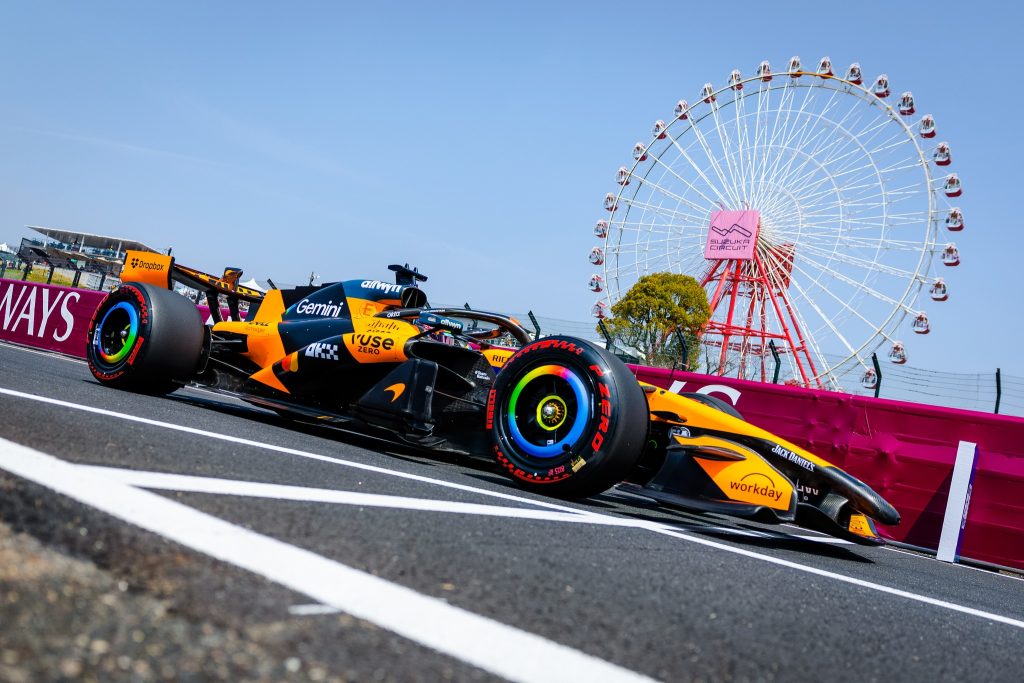
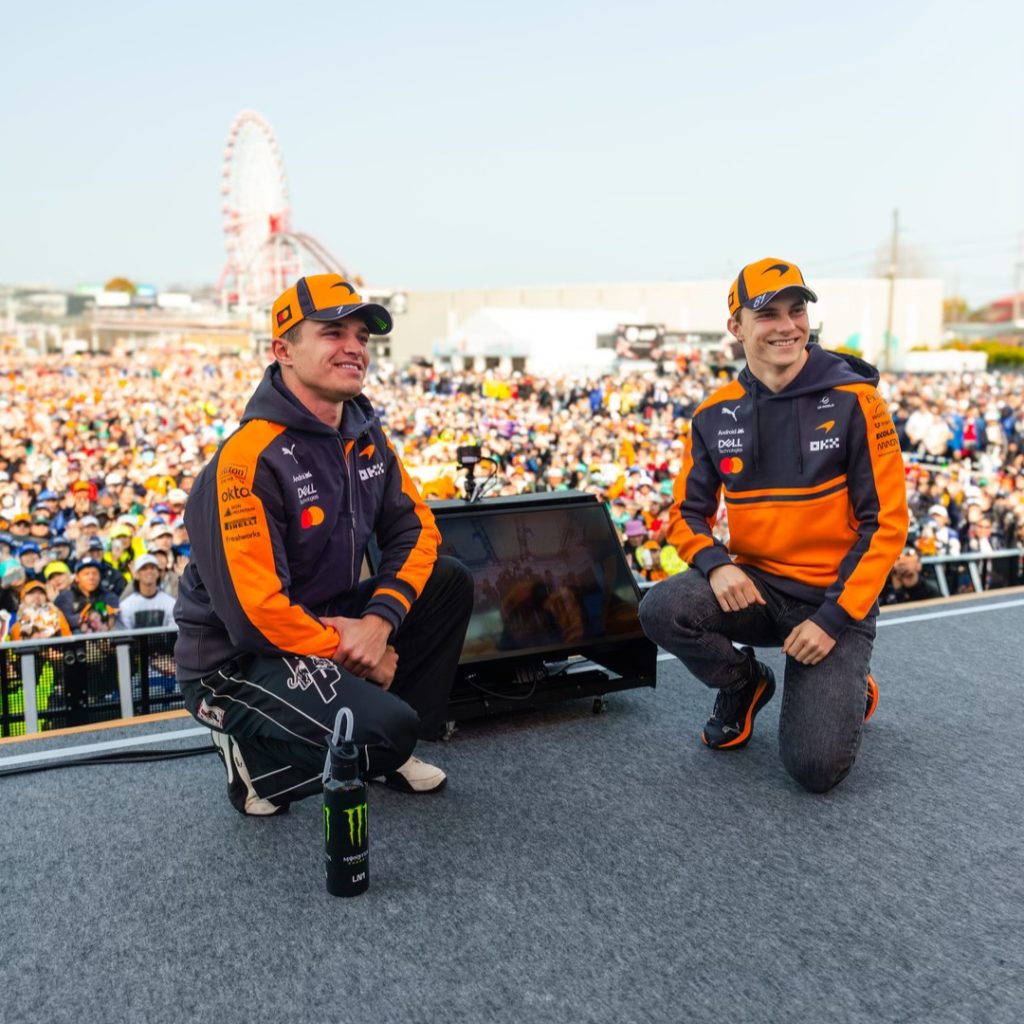
An early stop to cover a potential undercut was the sensible strategy and that is exactly what the team did.
Piastri’s fast start was in stark contrast to the wheelspin suffered by the front row Mercedes pairing. Charles Leclerc followed the McLaren, deposing Russell from second, while Norris moved ahead of his fellow Brit by Turn 3. It was even worse for pole-sitter Antonelli, who fell to sixth as Lando Norris and Lewis Hamilton also moved ahead.
The Australian had streaked out to a one-second advantage at the end of the opening lap, while we all wondered just how much of an advantage he could etch out before the seemingly inevitable march forward from the two Mercedes AMG Petronas F1 cars.
It took three laps for Russell to clear Norris, with Piastri now 3.6 seconds up the road. One lap later and Russell was now in second, with two seconds taken out of the leader’s advantage.
We had come to expect nothing less.
By Lap 8, Russell was on Piastri’s tail and took the lead nearing the end of the lap.
From there one imagined that George Russell would simply drive off into the sunset.
But the strangest thing then happened..
Oscar Piastri retook the lead of the race!
It was suggested that Russell had drained the charge from his battery in that attack and Piastri, who obviously hadn’t, then utilised his additional energy reserves to overtake down the front straight.
Piastri then remained ahead of the Mercedes AMG Petronas F1 driver until his stop on Lap
Kimi Antonelli had regained one position from Lewis Hamilton, but languished back in fifth until finally overtaking Norris on Lap 12. Whilst he had made heavy weather of the traffic ahead across the opening third of the race, he still remained within 2.5 seconds from the leaders.
That differential later proved to be crucial in the outcome of the Grand Prix.
Race leader Piastri was asked by his team about the prospect of stopping early to eliminate the prospect of a Mercedes undercut during the round of compulsory pitstops.
“If we think that the tyres can go to the end, then why not,” came Piastri’s reply as he began to contemplate the chances of a win. That confidence grew as he managed the gap to Russell in second.
“If we hold track position, I think we can hang on to this,” he said on team radio on lap 15.
Norris became the first of the lead group to stop on Lap 17, with Leclerc covering that move a lap later. Oscar Piastri cruised down the pitlane at the commencement of Lap 19 for his stop and resumed in sixth place, just behind Max Verstappen and some five seconds clear of Leclerc and Norris.
Verstappen kept the Australian at bay for two laps, which undoubtedly stymied his progress and ultimately played into the hands of Antonelli, who found himself in the lead following Russell’s stop at the end of Lap 21.
It was then that Mario Kart lightning bolt struck.
That moment between Bearman and Colopinto which triggered the Haas driver’s 50 impact into the barriers at Spoon Curve brought out an immediate full course caution.
The ensuing Safety Car intervention gave the equivalent of a free stop for those who had yet to pit. That included Antonelli and Hamilton, the pole sitter returned to the circuit with the race lead after Piastri, Russell and co were limited by the pace of the Safety Car.
Antonelli was almost one second ahead of second-placed Piastri when the green flag waved at the start of Lap 28. Hamilton dived past Russell for third as the race resumed with teammate Leclerc right behind the Mercedes driver and looking to move ahead.
By lap 37 it had become two very different stories for teammates Antonelli and Russell. The Italian had eased away from the rest by the tune of 6.2 seconds, while Russell had been passed by Leclerc for fourth place.
It was later revealed that Russell’s race had been hampered by a set up choice in qualifying that carried through to the race. His cause wasn’t helped by the Safety Car and a subsequent electrical glitch which had been triggered by a simultaneous gear change and button press.
“He had another frustrating issue where a bug in the software code, triggered by a button press and a gear shift at the same time, caused the power unit to go into superclip and charge the battery, which allowed Charles to pass, “Andrew Sholvin, Mercedes’ trackside engineering director, stated.
Russell eventually displaces Hamilton to take fourth place at the chequered flag, losing more ground to his teammate in the chase for the 2026 Formula 1 Driver’s Championship.
The Ferraris of Hamilton and Leclerc enthralled the sell-out crowd at Suzuka as they had done during the previous two Grand Prix, dicing each other for position and trading places with some of the most audacious passing moves. Whilst exhilarating to observe it must not have done much to help the pair stay ahead of Russell.
Leclerc moved ahead of Hamilton on Lap 42 to snare the final place on the podium. Hamilton fell back into the clutches of Russell and dropped to fifth on the following lap.
During those final laps, both Russell and Norris managed to overtake Leclerc and Hamilton for third and fifth respectively, but it didn’t stay that way for long.
At the chequered flag it was Antonelli who took the win, becoming the first teenager to win two Grand Prix in a single year. That added to his record in becoming the youngest F1 to score a pole position in China. The win also propelled him into the Championship lead ahead of teammate Russell. In doing so Kimi also becomes the youngest ever driver to lead the F1 World Championship.
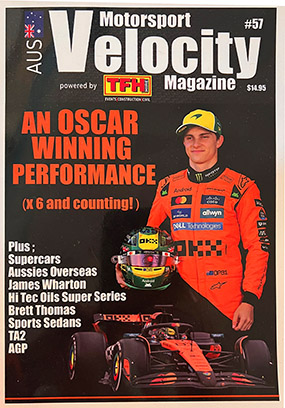
Oscar Piastri took the chequered flag for the first time in a Grand Prix this year. His second place more like a win given his misfortune thus far, while Leclerc made it three different marques on the podium in third.
Russell, Norris, Hamilton, Gasly, Verstappen, Lawson and Ocon completed the top 10.
“Wow. Turns out when we start these things we’re pretty good!” Piastri said rather dryly on team radio post-race.
“It feels pretty good. Of course, it’s too early to think about the championship but we are on a good way,” a very level-headed Kimi Antonelli said post-race.
“I had a terrible start. I need to check what happened. Then I was lucky with the safety car to be in the lead but then the pace was incredible.
“The second stint I felt very good with the car. I’m very pleased with that.”
There was still one more twist in the tale of the Japanese Grand Prix as the winners took to the podium.
While Piastri and Leclerc were handed clearly labelled bottles of champagne to spray, Antonelli received an unmarked version which turned out to be a form of sparkling water.
You see the legal drinking age in Japan is twenty.
And so the Formula 1 circus goes into an unanticipated four-week break as tensions in the Middle East continue.
Whether that provides the opportunity for the rest to catch up with Mercedes AMG Petronas F1 is one that only time will tell.
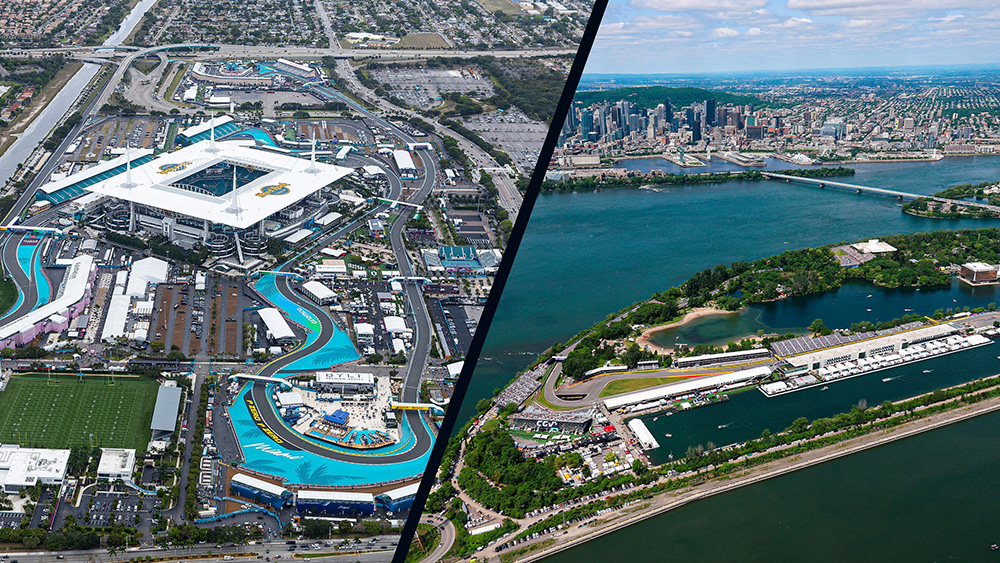
By Miami we should find that answer.
SUBSCRIBE TO VELOCITY MAGAZINE
For all our news keep your eyes peeled on the Velocity Magazine website and social media, Facebook, Twitter and Instagram for our daily updates and to get the latest edition of our glossy magazine subscribe here from just $55 for 12 months subscription.
GET OUR LATEST ISSUE NUMBER 55 HERE
NAMING RIGHTS SPONSOR


Related Posts


This Post Has 0 Comments