
MEDIA RELEASE/McLaren Mastercard - Photo: supplied The McLaren Mastercard Formula 1 Team secured the first-ever…
RED BULL RACING-GEARING UP FOR THE RE-START
MEDIA RELEASE/Red Bull Racing F1 Team – Photo: RBR website
On Monday, for the first time in two months, our Milton Keynes factory re-opened its doors for F1 work as we begin preparations for the 2020 Formula One Championship.
While the F1 shutdown meant we couldn’t engage in F1 related activity, the factory has not been entirely silent as we turned our engineering skill at Red Bull Advanced Technologies towards a race of a different kind – the race to support the NHS in the fight against COVID-19.
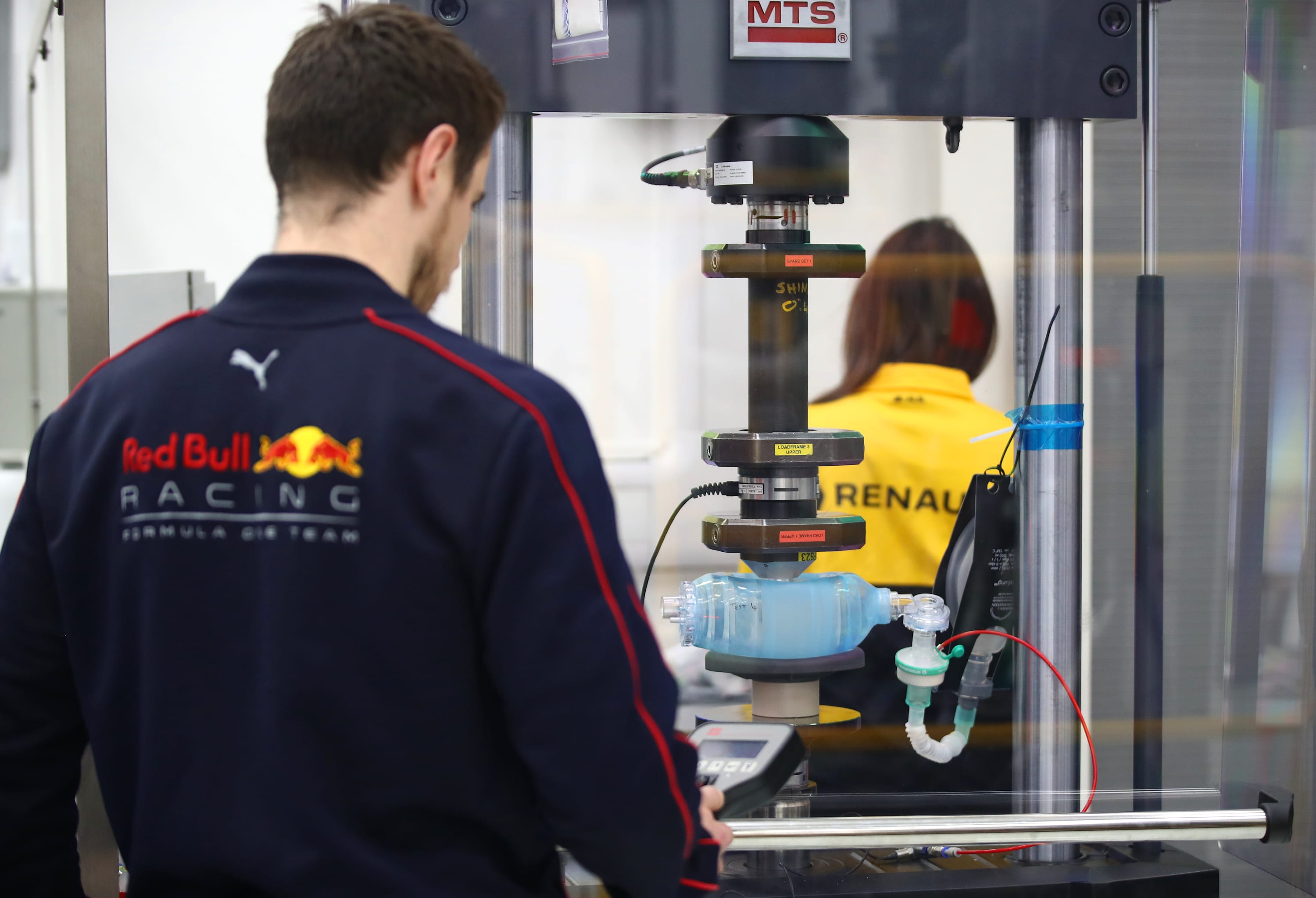
As part of the Project Pitlane collaboration between the seven UK-based F1 teams, our designers and engineers, alongside colleagues at Renault, led the charge to build a new ventilator. The brainchild of Dr Alastair Darwood, a member of the NHS England Clinical Entrepreneur Programme, and Junior Doctor, the BlueSky ventilator is a simple positive pressure ventilator designed for short-term emergency ventilation in trauma and critical care. The concept was identified by the UK government as useful in the fight against COVID-19 as it was easily scalable and had the potential to be mass produced with relative ease, compared to the more complex ventilators already used in critical care settings.
SIMWORX POLL: WOULD MOTORSPORT MEGA STARS MAKE YOU INCLINED TO ATTEND EVENTS?
If there’s one thing F1 teams excel at, it’s lightning quick development with precision manufacture, and with time a commodity in short supply, our designers and engineers, alongside colleagues at Renault and medical technology leaders Olympus, had a first prototype on the rig for testing.
With the pre-production prototype and ultimate MHRA sign-off just days away, the brakes were put on the BlueSky ventilator production as the NHS better understood the best way to treat patients with COVID-19.
And now with, we hope, the worst of the crisis behind us, that engineering prowess can once more be turned towards what we love and do best – building racing cars but we remain hugely proud of the speed at which this innovative design became reality, work which certainly won’t go to waste as the design has the potential to be used in other emergency care settings.
However, despite the cleverness of Dr Darwood’s invention, it was still just a concept and to get the ventilator from concept to production would, in normal circumstances, take a considerable amount of time – a commodity in short supply in a pandemic situation. To change that, Professor Tony Young OBE, Director of Medical Innovation at ARU put Dr Darwood in touch with Innovate UK and in turn with the UK’s F1 teams.
And if there’s one thing F1 teams excel at it’s lightning-quick development and within just two days of the first meeting to analyse the BlueSky ventilator concept at our Milton Keynes factory on 22 March, the first prototype was ready for extensive rig testing leading to the pre-production prototype and ultimate MHRA sign-off.
Our designers and engineers, alongside colleagues at Renault led the charge with mechanical design, manufacturing, electronics and control systems. The Team and Haas also collaborated on mechatronics and mechanical interface, with the other UK teams each playing their part. The Project Pitlane collaboration pooled their extensive network of suppliers within motorsport and the automotive industry including Nissan.
Along with the design task the factories were also re-purposed for mass manufacture of medical grade equipment. Race car assembly bays and composite clean rooms were rapidly re-purposed under the scrutiny of the medical manufacture regulators.
The design and execution of the initial prototype was so impressive that an initial order of units was placed by the UK Government with manufacturing capability being scaled up to provide for 30,000 units if required.
However, as the crisis evolved and the NHS better understood the virus it became clear that enough capacity would exist within the NHS with the existing equipment and the BlueSky project was halted.
Despite the brakes being put on the BlueSky ventilator just days before mass production began, all those involved in the project are hugely proud of the speed at which a clever design became reality thanks to F1’s incredible ability to innovate.
FURTHER READING:
Dr Alastair Darwood
“This project has been an incredible experience and a phenomenal collaboration between many different teams,” said Dr Darwood of BlueSky’s development. “A group of F1 engineers took my initial design and rapidly produced a pre-production prototype capable of mass manufacture and adherence to the rigorous demands of a COVID-19 ventilator. I am deeply honoured to be a part of this process and humbled by the dedication and commitment shown by every member of our team. I’ve seen the engineering skill behind the F1 cars first-hand now; a huge amount of engineering prowess goes into every single element of the car, and their fundamental design skills and problem-solving ability is exceptional.”
And now with, we hope, the worst of the crisis behind us, that engineering prowess can once more be turned towards what we love and do best – building racing cars, making them quick and then quicker again and in the process hopefully bringing back even more silverware to our newly re-opened, race-ready Milton Keynes home.
SUBSCRIBE TO VELOCITY MAGAZINE
For all our news keep your eyes peeled on the Velocity Magazine website and social media, Facebook, Twitter and Instagram for our daily updates and to get the latest edition of our glossy magazine subscribe here from just $55 for 12 months subscription.
GET OUR LATEST ISSUE NUMBER 36 HERE


Related Posts


This Post Has 0 Comments